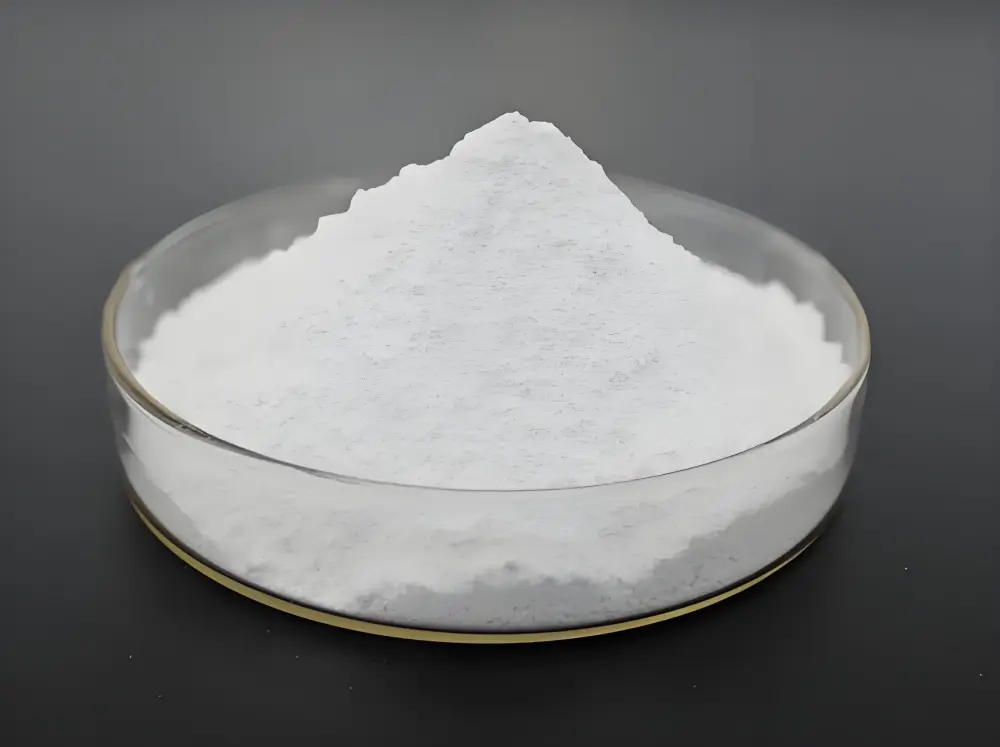
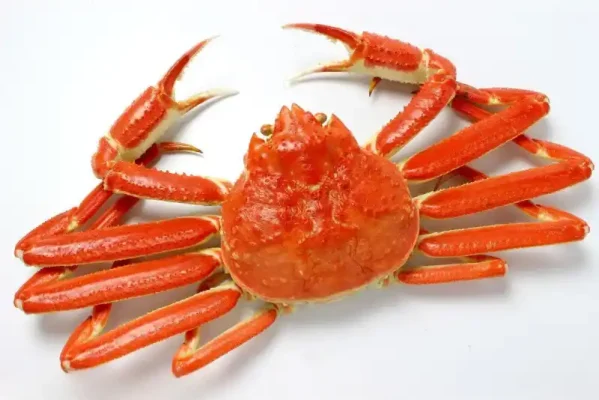
Chitin, chitosan, and chitosan oligosaccharide share the same raw material source—they are all extracted from crustacean organisms (such as crab shells). However, they differ in product form, extraction technology, processing stages, and thus their effects.
Chitin
Chitin was discovered by the French scholar Braconnot in 1811 and extracted from crustacean shells by Odier in 1823, who named it “Chitin” . Appearance and properties: Light beige to white.
Chitin was the first product to be practically applied, but it is insoluble in water, alkalis, most acids, and organic solvents, dissolving only in some concentrated acids. Its absorption rate in the human body is extremely low, as only a small portion is decomposed by enzymes like chitinase and lysozyme in the gastrointestinal tract. This requires large dosages, and adverse reactions occur in over 70% of users. When chitin undergoes chemical treatment to remove acetyl groups, it becomes chitosan.
Chitosan
Chitosan, chemically named polyglucosamine (1-4)-2-amino-β-D-glucose, is derived from chitin through deacetylation. Generally, a product with over 55% of N-acetyl groups removed is called chitosan.
Chitosan can dissolve in dilute acids, representing an advancement over chitin. However, both chitin and chitosan are macromolecules with molecular weights ranging from several hundred thousand to millions and are insoluble in water. When chitosan is further degraded, it becomes chitosan oligosaccharide.
Chitosan Oligosaccharide
Chitosan oligosaccharide are small molecules obtained by degrading chitosan, with a molecular weight of approximately 3,000 Da and a degree of polymerization ranging from 2 to 20. Thus, chitosan oligosaccharide is a mixture containing monosaccharides up to chitodecasaccharides, each with specific functionalities.
Chitosan oligosaccharide is directly soluble in water (water solubility > 99%) and have a 99.88% absorption rate in the human body. They require smaller dosages, cause fewer adverse reactions, and directly participate in physiological regulation more effectively than chitosan. In contrast, chitosan must first be partially degraded into small-molecular-weight chitosan oligosaccharide by human biological enzymes (typically only 1–5% is degraded), with the remaining 95% excreted through the intestinal system. Therefore, chitosan oligosaccharide enhances immune function more strongly than chitosan.
Specific Differences Between Chitosan Oligosaccharide and Chitosan
1. Molecular Weight:
Chitosan oligosaccharide is a new product obtained by treating chitosan with specialized bioenzymatic technology, with a molecular weight below 3,000 Da. Chitosan is a partially deacetylated derivative of chitin, with a molecular weight of 500,000–1,000,000 Da.
2. Solubility:
Chitosan oligosaccharide, with lower molecular weights, are completely soluble in water. Chitosan only dissolves in dilute acid solutions. Improved water solubility is a key factor influencing the physiological activity of chitosan oligosaccharide—solubility enables absorption and utilization by organisms, making chitosan oligosaccharide more easily absorbed by humans, animals, and plants.
3. Functionality:
Chitosan oligosaccharide with a molecular weight below 2,000 Da exhibit unique physiological activities: enhancing macrophage function; inhibiting the growth and metastasis of tumor cells; reducing cholesterol and blood lipids; and possessing antibacterial, bacteriostatic, and significant moisture-retention properties.
Chitosan oligosaccharide with a molecular weight below 5,000 Da can hinder the growth and reproduction of pathogenic bacteria, promote protein synthesis, activate plant cells, and thereby accelerate plant growth.
The diverse functions of chitosan oligosaccharide distinguish them from other oligosaccharides. They are the only alkaline, positively charged oligosaccharides found to date—a characteristic that allows them to be absorbed by the intestines into the bloodstream. This circulation to various parts of the body is the basis for their numerous biological functions.
For chitosan oligosaccharide to be absorbed by the intestines, they must resist digestion by digestive enzymes. Chitosan oligosaccharide are polymers of glucosamine linked by β-1,4-glycosidic bonds, while human gastrointestinal digestive enzymes primarily act on α-1,4-glycosidic bonds. Thus, chitosan oligosaccharide maintains structural integrity in the gastrointestinal tract.
Tianya Chemical specializes in the production and supply of high-quality chitosan oligosaccharide, chitosan, and related derivatives, catering to diverse industrial and research needs.