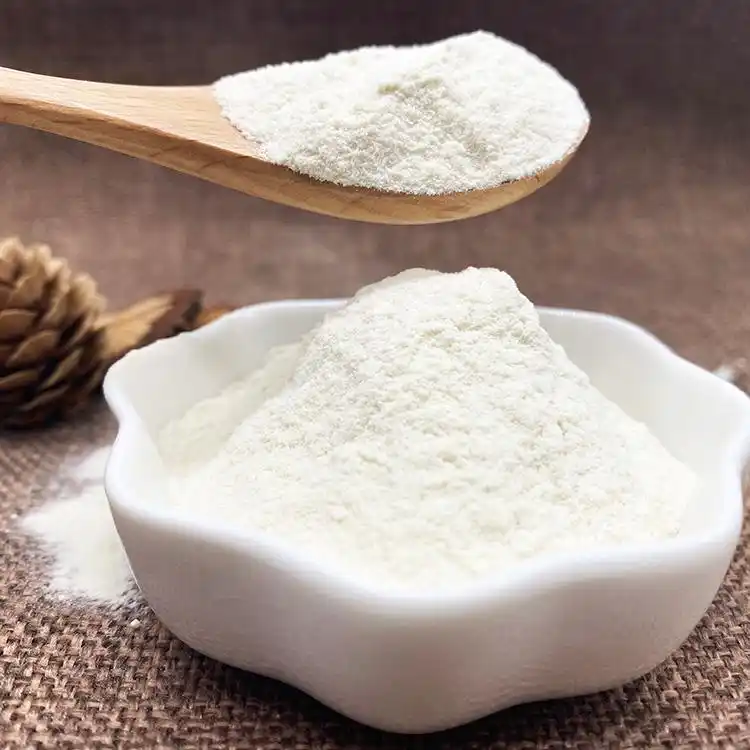
Chitosan is the only basic polysaccharide among natural polysaccharides. It is a product of deacetylation of chitin, also known as chitosamine or soluble chitin. Non-toxic, with in vivo biodegradability and biocompatibility, its structure is similar to cellulose, and it is praised as the sixth essential life element following proteins, fats, carbohydrates, vitamins, and inorganic salts. Chitosan is an environmentally friendly and renewable natural polymer material, which has been widely used as a pharmaceutical excipient in new drug formulations and has broad development prospects.
Chitosan has excellent adsorption, film-forming, permeability, fiber-forming, hygroscopicity, and moisturizing properties, making it widely used in pharmaceutical dosage forms.
Tianya Chemical is the leading chitosan supplier in China, provides refined chitosan optimized for excipient applications, ensuring consistent quality to meet the stringent requirements of drug formulation development.
In tablets, chitosan can be used as an excipient for direct powder compression, suitable as a direct compression vehicle, and can also be used as a coating material with extremely excellent properties. Adding chitosan to common excipients (mannitol, lactose, or starch) can improve the flowability of mixed powders. When chitosan is added to tablets at a concentration higher than 5% as a disintegrant, its effect is better than that of corn starch and microcrystalline cellulose.
In sustained and controlled-release preparations, chitosan can be used as an excipient and controlled-release membrane material for sustained and controlled-release preparations. The films formed by it have good permeability to drugs and are often used as the capsule material for microcapsules and microspheres. In the field of biomedicine, chitosan is often used in environment-sensitive and intelligent drug sustained and controlled-release systems. As a sustained and controlled-release carrier, chitosan has been made into microspheres containing small-molecule anti-inflammatory drugs, insulin, smallpox vaccine, and interleukins. The application of chitosan as a new pharmaceutical excipient in sustained and controlled-release drug delivery systems has attracted strong research interest from experts and scholars.
In targeted preparations, current research on the targeting effect of chitosan mainly focuses on three aspects: gene delivery therapy, colon drug delivery, and nasal drug delivery. Chitosan has been recognized by the industry as an excipient for nasal inhalants. Studies have shown that chitosan powder is the most effective dosage form in the insulin nasal targeting drug delivery system in animal experimental models.
In film preparations, chitosan has good film-forming properties. The chitosan-traditional Chinese medicine composite film, using modern technologies such as microemulsification and microcapsule technology, combines the active ingredients of traditional Chinese medicine with chitosan to make a medicinal film. It not only maintains the biological activity of chitosan itself but also enables the active ingredients of traditional Chinese medicine to be absorbed efficiently and in a sustained-release manner. It has the advantages of convenient spraying, natural film formation, sustained release and high efficiency, full coverage, strong permeability, easy absorption, and accelerated ulcer healing, meeting the basic requirements of modern new dressing design, and is a new field in the innovation of external preparations of traditional Chinese medicine.
In gel preparations, chitosan can be dissolved in water when combined with hydrochloric acid, acetic acid, etc., to form a gel. After forming a gel, it can encapsulate drugs, reduce the irritation of drugs to the gastrointestinal tract, or control the release rate of drugs.
With the rapid development of biotechnology, genetic engineering, and material science, chitosan and its derivatives as sustained and controlled-release materials for peptides, proteins, and nuclear drugs will be widely studied and applied. In particular, structurally modified chitosan, with its excellent biocompatibility and adhesiveness, indicates that it has broad prospects as a future functional pharmaceutical excipient in peptide drug research and new formulation development.