Applications in the Food Industry
The films formed by aqueous solutions of N, O-carboxymethyl chitosan have selective permeability to gases, making them particularly suitable as fruit preservatives. The chelating effect of N-carboxymethyl chitosan also plays a beneficial role in preserving meat. It can prevent the formation of hexanal and unpleasant odors, exerting an antioxidant effect.
Applications in the Cosmetics Industry
O-carboxymethyl chitosan and N-carboxymethyl chitosan are suitable as functional ingredients in water-based cosmetics due to their excellent water solubility, emulsifying properties, and film-forming properties. The viscosity of 0.25% aqueous solutions of N-carboxymethyl chitosan and O-carboxymethyl chitosan is higher than that of other types of moisturizers, and their long-lasting moisturizing ability is superior to hyaluronic acid. Moreover, they are very stable over a wide pH range, even at high temperatures and with long-term heating, making them particularly suitable for cosmetics that require heating or sterilization, such as cleaning solutions and facial cleansers. In particular, N-carboxymethyl chitosan contains a large number of glycine groups, which are abundant in the skin and will be very helpful for skin health care. In addition, N-carboxymethyl chitosan, along with chitosan and other modified chitosans, has enhanced antibacterial effects. This is another advantage in cosmetic applications. It has a very high inhibitory effect on typical tooth decay bacteria in the oral cavity, making it suitable as an ingredient in toothpaste formulations.
Applications in Agriculture
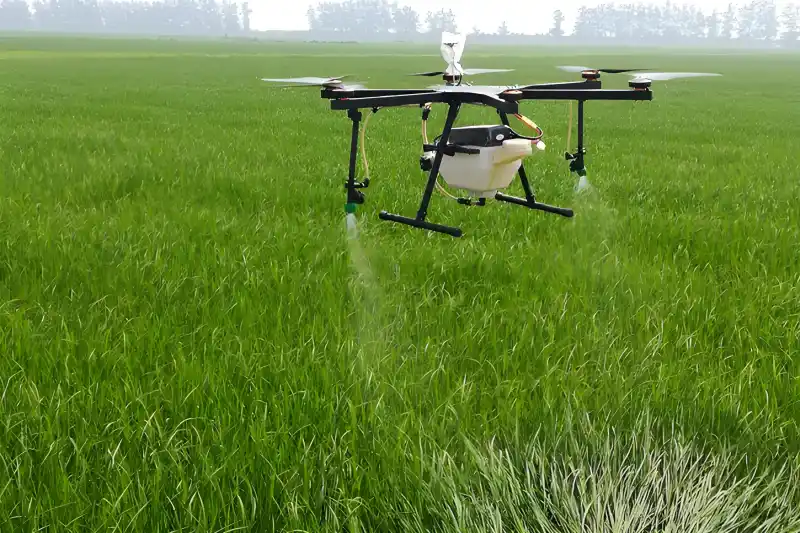
Aflatoxins present in crops such as corn and peanuts before harvest are toxic to humans and animals. It has been reported that N-carboxymethyl chitosan can reduce aflatoxins by more than 90% and reduce fungal growth to less than half. Toxic fungal cells show that the presence of N-carboxymethyl chitosan inhibits spore germination and fungal spore formation. When corn and potatoes are treated with N-carboxymethyl chitosan, the content of stored proteins can increase by 20% to 30%. N-carboxymethyl chitosan increases the content of stored proteins in crops by enhancing the utilization of ammonium ions. Similarly, N-carboxymethyl chitosan can double the protein content in corn seeds and increase the RNA content in the entire cell. These results are not only of great significance for increasing the edible and economic value of corn and other crops but also provide a new approach for studying the mechanisms of plant metabolic regulation.
Applications in Medicine
N-carboxymethyl chitosan has been found to be suitable for preventing adhesion between tissues and is used in surgical wounds in the form of gels or films. Due to its higher viscosity and elasticity than plasma, it can prevent blood from coagulating on tissue surfaces, thereby preventing adhesion. O-carboxymethyl chitosan has immune functions that induce hapten-specific antibodies and serves as a drug carrier for controlled release. For low-molecular-weight N-carboxymethyl chitosan, if sulfonation is performed on the hydroxyl groups at the C3 and C6 positions and the amino group at the C2 position, the product has anti-reversion activity against HIV-1 and RLV viruses. The sulfonated product of N-carboxymethyl chitosan also has heparin-like activity, which can specifically act on internal coagulation factors without reacting with in vitro and common coagulation factors. Its mechanism of action is completely different from that of heparin, which is important for anticoagulant treatment.
Tianya Chemical offers high-quality carboxymethyl chitosan, a key derivative of chitosan, tailored to meet the diverse needs of these industrial applications with consistent purity and performance.