Due to its excellent biosafety and biological functions, chitosan is widely used in the food processing industry as a preservative, thickener, antioxidant, juice clarifier, decolorizer, antibacterial agent, food preservative, functional sweetener, and more.
Application in Beverages
Chitosan is a rare natural non-toxic polycation, containing amino and hydroxyl active groups in its molecules, which can bind and coagulate with anionic substances such as pectin, proteins, and tannin-based polyphenols, making it a new type of juice clarifier. Studies have found that enzymatic treatment mainly reduces the viscosity of passion fruit pulp juice, while ordinary centrifugation decreases the color and turbidity of the juice. However, after treatment with chitosan under optimal process conditions followed by centrifugation, the juice becomes almost clear and colorless, with significantly reduced viscosity. Owing to its high performance and low cost, chitosan can serve as an economical and suitable auxiliary method for clarifying fruit juice beverages.
Research on clarifying apple juice, lemon juice, and orange juice with chitosan shows that the turbidity of all three juices decreases significantly after chitosan treatment. The optimal chitosan concentrations for the best clarification effects in apple juice, lemon juice, and orange juice are 0.025%, 0.1%, and 0.025%, respectively. This treatment only slightly reduces the contents of reducing sugars and ascorbic acid in the juice, with almost no impact on the nutritional value, pH, titratable acidity, total solids content, etc. These findings indicate that chitosan is an ideal natural clarifier.
Application in Fresh-keeping of Fruits and Vegetables
Chitosan and its derivatives have excellent film-forming and antibacterial properties. Therefore, chitosan coating treatment can significantly inhibit browning of fruits and vegetables, reduce enzyme activity, maintain their quality, and extend the fresh-keeping period, leading to its widespread application in fruit and vegetable preservation.
A study treated fresh papayas with 0.5%–2% chitosan solution and stored them at (12±1)℃ with 85%–95% humidity. Compared with the untreated control group during storage, the results showed that appropriate concentrations of chitosan could slow down the respiration intensity and reduce ethylene production of the fruits, thereby delaying ripening. This resulted in lower weight loss, higher hardness, smaller changes in skin color, and reduced soluble solids content in the treated group, extending the storage period and improving fruit quality.
Another study treated asparagus with chitosan solutions of different molecular weights and concentrations, storing them at 2℃ with 95% humidity for 5 weeks. The results showed that asparagus treated with 0.25% high-molecular-weight chitosan and 0.50% low-molecular-weight chitosan solutions exhibited better quality characteristics compared to other controls, including reduced color change, lower weight loss, and less ascorbic acid loss. In particular, asparagus treated with 0.25% high-molecular-weight chitosan solution had a storage period extended by approximately 9 days.
Additionally, research indicates that litchis coated with 1% chitosan solution had lower respiration rate, pulp temperature, polyphenol oxidase activity, and weight loss compared to the uncoated control group. The fresh-keeping period at room temperature exceeded that of the control group by 5 days, extending the fruit’s storage life.
Application in Meat Products
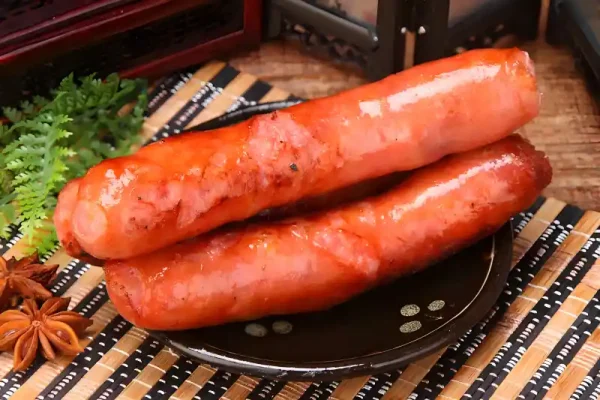
A study used edible composite packaging films (CGT films) prepared from chitosan and green tea extract to package pork sausages, which were stored at 4℃. Compared with the untreated control group, the samples packaged with CGT films showed minimal changes in indicators such as color, texture, thiobarbituric acid value, and microbial growth. The results demonstrated that CGT film packaging could inhibit lipid oxidation and microbial growth under refrigerated conditions, maintaining the quality of pork sausages and extending their shelf life.
Li et al. treated fresh pork with aqueous solutions of chitosan, xylose, and chitosan Maillard reaction products (MRPs), using samples without any solution immersion as the control group, and stored them at 4℃ for 20 days. Determination of indicators such as fat oxidation value and total colony count during different storage periods showed that the thiobarbituric acid value of the control group reached 476.0 μg/kg and 597.6 μg/kg on days 9 and 15, respectively, approaching or exceeding the consumer-perceived threshold for rancidity (500 μg/kg). In contrast, the thiobarbituric acid values of the chitosan and MRPs aqueous solution treatment groups remained far below 500 μg/kg even on day 20.
For the total colony count, the control group reached 6.88 and 10.74 (log10cfu/g) on days 9 and 15, respectively, approaching or exceeding the acceptable level of 7 (log10cfu/g). The chitosan solution treatment group had total colony counts of 5.90 and 7.28 (log10cfu/g) on days 15 and 20, respectively, which were below or slightly above the acceptable level. The MRPs aqueous solution treatment group had total colony counts below the acceptable level on day 15; on day 20, the counts were related to the Maillard reaction time, with MRPs prepared at an appropriate reaction time exhibiting good antibacterial performance, keeping the total colony count far below the acceptable level. These results indicate that chitosan and its derivatives have broad application prospects as natural preservatives in meat products.
Application in Aquatic Products
Pacific oysters were treated with chitosan solution, ozone water, and a chitosan-ozone water mixture, then stored at 5℃. Microbiological analysis, biochemical index determination, and sensory evaluation were conducted during different storage periods. The results showed that the control group (without any treatment) exceeded the acceptable total colony count for oysters (10⁷ cfu/g) after 8 days of storage. In contrast, the storage periods during which the total colony count remained within the acceptable level were approximately 14 days for the chitosan solution treatment group and over 20 days for the ozone water and chitosan-ozone mixture treatment groups.
Chemical analysis revealed that the volatile basic nitrogen (VBN) value of the control group was 20.65 mgN/100g on day 8, while those of the chitosan solution treatment group and the ozone water and chitosan-ozone mixture treatment groups were 23.16 mgN/100g (on day 14) and 22.25 mgN/100g (on day 20), respectively, all below the VBN threshold of 30 mgN/100g for spoilage in fresh aquatic products.
Sensory evaluation showed that the shelf lives at which the control group, chitosan solution treatment group, and ozone water and chitosan-ozone mixture treatment groups reached the unacceptable freshness score were 8, 15, and 21 days, respectively. These results indicate that chitosan solution, ozone water, and their mixture are effective preservatives that can significantly extend the shelf life of oysters.
Another study coated silver carp with 2% chitosan solution and frozen them at -3℃ for 30 days. Regular determination of indicators such as total colony count, pH, thiobarbituric acid value, VBN, and sensory characteristics during storage showed that the chitosan-coated silver carp maintained good quality and had an extended freezing storage period compared to the control group.