As a professional manufacturer and supplier of chitosan oligosaccharide, Tianya Chemical has long been committed to producing high-quality chitosan oligosaccharide products using advanced bioenzymatic technology. Below, we combine our professional production experience and product expertise to answer 20 common questions about chitosan oligosaccharide:
1. What is chitosan oligosaccharide?
Answer: Chitosan oligosaccharide, also known as chitooligosaccharide or low-molecular-weight chitosan, is an oligosaccharide product with a degree of polymerization (DP) ranging from 2 to 20. It is obtained by degrading chitosan through special bioenzymatic technology (physical or chemical technologies are also used in production). As a low-molecular-weight product, it has good water solubility, strong functional effects, and high biological activity. It possesses many unique properties that chitosan lacks, such as higher solubility and easier absorption by organisms.
2. How is chitosan oligosaccharide produced?
Answer: Chitin is a polymer composed of N-acetylglucosamine linked by β-1,4-glycosidic bonds. After treatment with strong alkali to remove acetyl groups, chitin is converted into chitosan, which is then degraded to form low-molecular-weight chitosan oligosaccharide.
3. What are the physical and chemical properties of chitosan oligosaccharide? What are the differences in properties between chitosan oligosaccharide and chitosan?
Answer: Chitosan oligosaccharide has a low molecular weight and high solubility—it can dissolve in water even when the pH is above 10. In contrast, chitosan can only dissolve in acidic solutions. Therefore, chitosan oligosaccharide, being water-soluble, can be absorbed and utilized by organisms, exhibiting physiological activity. Unlike chitosan, chitosan oligosaccharide does not have the properties of high-molecular-weight compounds, such as film-forming ability and the capacity to form high-viscosity solutions.
Chitosan oligosaccharide molecules contain exposed amino groups and hemiacetal hydroxyl groups, which are prone to condensation reactions under high-concentration and high-temperature conditions, generating Schiff bases. Its solution has strong reducibility and can undergo oxidation reactions in the presence of oxidants or when exposed to air. When chitosan oligosaccharide forms salts, its exposed amino groups are protected, enhancing its stability.
The residual sugar groups of chitosan oligosaccharide have an amino group at the C2 position and a hydroxyl group at the C3 position, enabling it to chelate metal ions with a specific ionic radius. Additionally, chitosan oligosaccharide is alkaline due to the presence of amino groups, so it can adsorb H⁺ ions in solutions and acidic substances in the human body, shifting the internal environment toward alkalinity and improving the body’s internal conditions.
4. What functions does chitosan oligosaccharide have?
Answer: Chitosan oligosaccharide has 9 main functions:
(1) Prevention and control of plant diseases
(2) Promotion of plant growth and absorption of calcium and minerals
(3) Enhancement of the immune system in animals
(4) Improvement of animal growth performance
(5) Flavor enhancement, preservation, and freshness retention in food
(6) Detoxification, liver protection, and immune enhancement
(7) Blood glucose reduction, cancer prevention, and anti-cancer effects
(8) Skin moisturization, whitening, and anti-aging
(9) Skin antibacterial effects and radiation protection
5. What substances mainly constitute the water-insoluble matter of chitosan oligosaccharide?
Answer: The water-insoluble matter of chitosan oligosaccharide mainly includes: impurities in chitosan raw materials and auxiliary materials, as well as by-products generated during the production process.
6. Does the moisture content of chitosan oligosaccharide refer to loss on drying?
Answer: Loss on drying refers to the weight lost by a substance after being dried to a constant weight under specified conditions. The moisture content of a substance is not equivalent to loss on drying in a general sense. However, if the moisture content is measured using a drying method (consistent with the specified conditions for determining loss on drying), the resulting value will be the same as the loss on drying.
7. What does “ignition residue” mean in the quality indicators of chitosan oligosaccharide? What are the influencing factors?
Answer: Ignition residue is determined by igniting a constant-weight sample in a muffle furnace at 550°C for 4 hours and calculating the content of the remaining residue, which mainly consists of various salts.
Influencing factors include:
– Salts in raw materials and auxiliary materials;
– Salts in fermentation enzyme solutions.
8. Why is the molecular weight of chitosan oligosaccharide expressed as number-average molecular weight?
Answer: Chitosan oligosaccharide is a homologous mixture composed of (acetylated) glucosamine units with different degrees of polymerization, i.e., a mixture of polymers with different molecular chain lengths. The number-average molecular weight is the average molecular weight calculated based on the number of molecules.
9. The color of chitosan oligosaccharide varies significantly. What are the main factors determining its color? Is there an inherent connection between color differences and its functions?
Answer: The main factors affecting the color of chitosan oligosaccharide are:
(1) Colored impurities in raw materials and auxiliary materials (usually black substances, but also other colored substances);
(2) Reactions of chitosan oligosaccharide: the Maillard reaction (carbonyl-amine reaction) of chitosan oligosaccharide produces melanoidins (black substances); oxidation of chitosan oligosaccharide leads to darker colors.
Among these factors, factor (2) is closely related to the functions of chitosan oligosaccharide, as it causes changes in the properties of chitosan oligosaccharide.
10. Chitosan oligosaccharide is an alkaline oligosaccharide. Why does its aqueous solution show acidic pH?
Answer: Chitosan oligosaccharide contains basic amino groups. The reason why commercial chitosan oligosaccharide aqueous solutions are acidic is that chitosan must be dissolved in acid during the bioenzymatic degradation of chitosan, which causes the exposed amino groups to undergo protonation. When chitosan oligosaccharide dissolves in water, the acid is released, resulting in an acidic pH.
11. What is the degree of deacetylation (DDA) of chitosan oligosaccharide?
Answer: The degree of deacetylation of chitosan oligosaccharide refers to the proportion of monomers without acetyl groups in the total number of monomers in the homologous mixture of chitosan oligosaccharide.
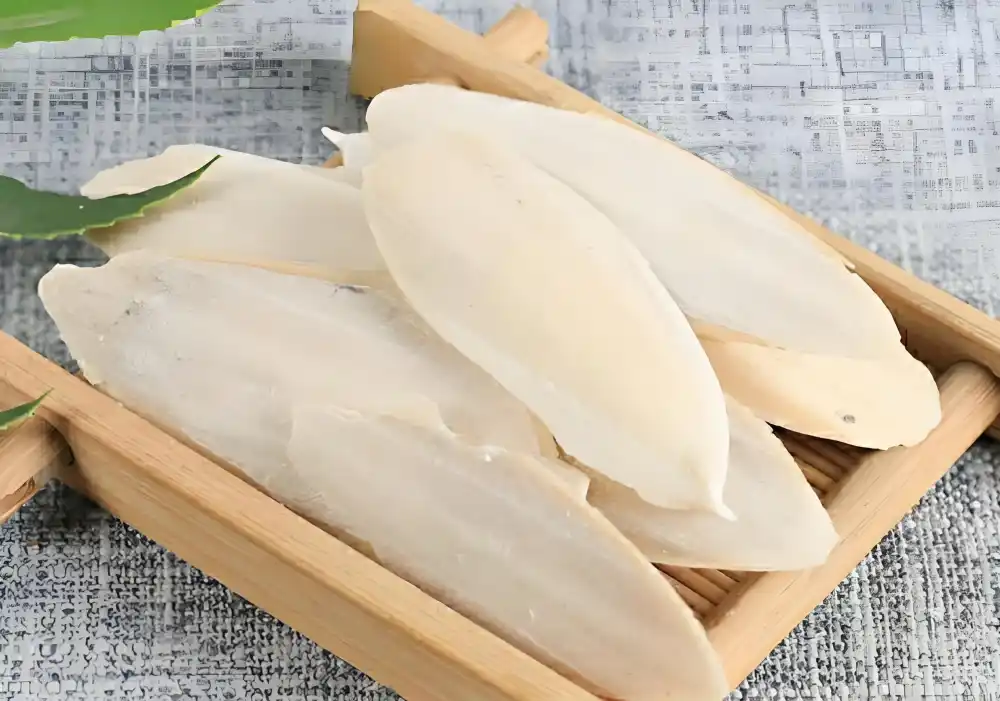
The production of chitosan oligosaccharide involves the following process: shrimp and crab shells are treated to remove calcium and protein to form chitin; chitin is deacetylated to form chitosan; finally, chitosan is degraded to produce chitosan oligosaccharide. Since deacetylation occurs throughout the process, the term “degree of deacetylation” is used.
12. When chitosan oligosaccharide powder is placed in air, why does its viscosity increase rapidly?
Answer: Chitosan oligosaccharide has strong hygroscopicity. When exposed to air with a humidity of ≥40%, it absorbs moisture. A sugar solution with extremely high concentration will have significantly increased viscosity.
13. What is the relationship between the degree of polymerization (DP) and molecular weight of chitosan oligosaccharide?
Answer: The chemical structure of chitosan oligosaccharide is a polymer composed of N-acetylglucosamine and/or glucosamine linked by β-1,4-glycosidic bonds. Chitosan oligosaccharide produced by degrading chitosan is always a mixture of chitosan oligosaccharide molecules with different degrees of polymerization.
The degree of polymerization refers to the number of individual structural units in a polymer molecular chain. The structural units of chitosan oligosaccharide are N-acetylglucosamine or glucosamine. Thus, the molecular weight of chitosan oligosaccharide is equal to the product of its degree of polymerization (DP) and the molecular weight of its structural unit (Mr), approximately 161 × DP.
14. Chitosan oligosaccharide has a wide range of functions. What determines the differences in its functions?
Answer: The rich functions of chitosan oligosaccharide are determined by its physical and chemical properties. The degree of polymerization (molecular weight) and degree of deacetylation only slightly affect the enhancement or weakening of certain specific functions. Since chitosan oligosaccharide products (agricultural grade, food grade, pharmaceutical grade, etc.) are mixtures, their functions are determined by the physical and chemical properties of chitosan oligosaccharide itself. The differences in functions between different chitosan oligosaccharide products are not significant.
15. When chitosan oligosaccharide is consumed as food or a health supplement, can it be absorbed by the human body? If yes, does it participate in metabolism?
Answer: Chitosan oligosaccharide can be absorbed by the human body and exerts regulatory effects on the body, such as lowering blood pressure, blood lipid, and blood glucose, as well as enhancing immunity.
Chitosan oligosaccharide participates in human metabolism. The human body contains an endogenous β-glucosaminidase called chitotriosidase, which is secreted by activated macrophages. This enzyme degrades chitosan oligosaccharide into glucosamine and acetylglucosamine—substances that are essential for the human body but difficult to obtain from food.
16. Can the degree of deacetylation roughly reflect the content of chitosan oligosaccharide?
Answer: The degree of deacetylation of chitosan oligosaccharide refers to the proportion of monomers without acetyl groups in the total number of monomers in the homologous mixture of chitosan oligosaccharide. It is incorrect to use it to reflect the content of chitosan oligosaccharide.
Some companies do not include the content in the quality inspection report when their products have low detected content. When customers inquire about the content, these companies misleadingly use the degree of deacetylation to represent it. In fact, this is not the case—for example, does chitosan oligosaccharide raw material with a deacetylation degree of 95% have a higher content than that with a deacetylation degree of 85%? Do not be misled by such claims.
17. Does smaller molecular weight of chitosan oligosaccharide lead to darker color?
Answer: There is no direct relationship between the color of chitosan oligosaccharide and its molecular weight. Pure chitosan oligosaccharide is white. During the enzymatic hydrolysis of chitosan into chitosan oligosaccharide, a smaller molecular weight requires a longer enzymatic reaction time. This increases the contact time of the chitosan oligosaccharide solution with air at a constant high temperature, leading to oxidation of chitosan oligosaccharide. As a result, the product after spray drying has a darker color and lower content.
18. Which factors are related to the dissolution rate of chitosan oligosaccharide?
Answer: Several factors affect the dissolution rate of chitosan oligosaccharide:
– Dissolution concentration**: All substances have a certain solubility; a larger amount of solute requires a longer time to dissolve.
– Purity of chitosan oligosaccharide**: Impurities such as proteins and ash can affect its dispersion rate in water.
– Particle size of chitosan oligosaccharide**: The fineness of the powder affects its dissolution rate (finer powder dissolves faster).
19. What is the relationship between the content of chitosan oligosaccharide produced by the bioenzymatic method and pH?
Answer: Bioenzymatic hydrolysis requires chitosan to be in a dissolved state. However, chitosan is insoluble in water and can only be dissolved by adding acid. This leads to the presence of bound acid and residual free acid in the chitosan oligosaccharide solution produced by the bioenzymatic method. After spray drying, some acid remains in the chitosan oligosaccharide powder—this is why chitosan oligosaccharide solutions are acidic. Therefore, the pH value indirectly reflects the quality of chitosan oligosaccharide.
20. Compared with other oligosaccharides such as xylooligosaccharides, fructooligosaccharides, and maltodextrin oligosaccharides, what obvious functional advantages does chitosan oligosaccharide have?
Answer: The functional advantages of chitosan oligosaccharide over other oligosaccharides mainly lie in the following two aspects:
(1) Chitosan oligosaccharide is composed of glucosamine units linked by β-1,4-glycosidic bonds, with a degree of polymerization ranging from 2 to 8. It is the only alkaline and positively charged oligosaccharide found in nature.
(2) Chitosan oligosaccharide is the only oligosaccharide that can be absorbed into the bloodstream through the intestinal tract of animals, which is the basis for its unique functional effects.