
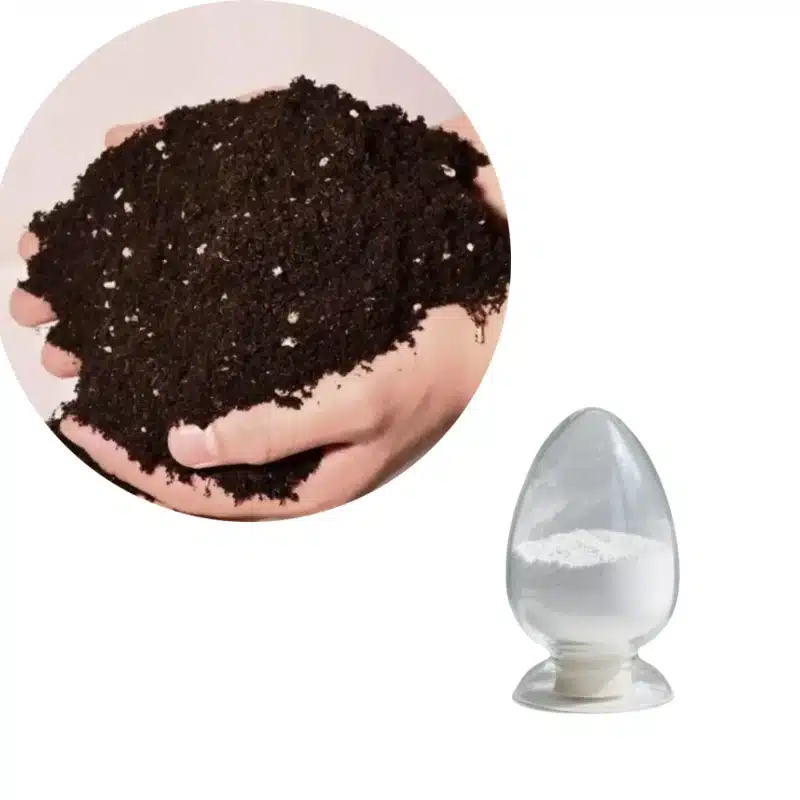
The application of chitosan in the fertilizers field has expanded from a single “efficiency-enhancing additive” to a multifunctional role encompassing “nutrient regulation–soil improvement–crop stress resistance.” It not only improves fertilizer utilization but also optimizes crop growth environments.
As a leading producer and provider of chitosan, Tianya Chemical delivers high-quality chitosan designed for fertilizer applications. With sustainable sourcing and strict processing, our chitosan ensures purity and compatibility across diverse fertilizer blends.
Applications Of Chitosan In The Fertilizers
Chitosan Can Enhance Nutrient Absorption Efficiency and Fertilizer “Synergy”
Chitosan significantly improves the utilization of nitrogen, phosphorus, potassium, and trace elements by regulating crop physiological metabolism and soil nutrient forms. Core mechanisms include:
Promoting root development to expand nutrient absorption area.
Chelating/adsorbing nutrients to reduce leaching and fixation.
Regulating crop metabolism to enhance nutrient conversion capacity.
Chitosan Can Serve as a Slow-Release Carrier to Extend Fertilizer “Duration”
Chitosan’s film-forming ability, gel properties, and biodegradability make it an ideal slow-release fertilizer carrier. Nutrient-controlled release is achieved through “coating” or “embedding” technologies. Core application forms include:
Coated Slow-Release Fertilizers
Chitosan is used as a coating material for granular fertilizers.
Gel-Controlled Release Fertilizers
Chitosan cross-linked with ions forms hydrogels to embed liquid fertilizers.
Nano-Carrier Enhanced Fertilizers
Nano-scale chitosan (1–100 nm) serves as a carrier for trace elements due to its large surface area and strong adsorption capacity.
Chitosan Can Stimulate Crop Stress Resistance and “Biostimulant” Functions
Though not a nutrient itself, chitosan acts as a “biostimulant” to regulate crop physiology, enhancing resilience against stresses and indirectly improving fertilizer “effective utilization”:
Chitosan Can Enhance Drought and Salt-Alkali Resistance
Induces synthesis of osmoregulatory substances to maintain cellular osmotic pressure.
Boosts root water absorption/retention, reducing damage from high osmotic pressure in saline-alkali soils.
Chitosan Can Improve Disease and Pest Resistance
Activates crop immune systems to produce disease-resistant compounds.
Forms a physical barrier: Chitosan films on crop surfaces block pathogen invasion .
Chitosan Can Improve Soil Environment and Optimizing “Nutrient Reservoir” Functions
Chitosan enhances soil physicochemical properties and microbial communities to create an optimal environment for fertilizers:
Improves soil structure.
Regulates soil microbial communities.
Application Forms Of Chitosan in Specialty Fertilizers
Chitosan is widely integrated into diverse fertilizer products for targeted solutions:
Organic-Inorganic Compound Fertilizers: Added to enhance organic fertilizer adhesion and slow-release properties.
Foliar Fertilizers: Utilizes adhesion (reducing leaf runoff) and absorption promotion, increasing nitrogen/phosphorus uptake efficiency by 40%.
Seedling Fertilizers: Added to seedling substrates to boost root development and stress resistance.
Advantages and Prospects of Chitosan in fertilizers
Chitosan’s application in fertilizers offers significant advantages aligned with modern agricultural demands:
Eco-Friendly: Fully biodegradable, no secondary pollution, avoiding residues from traditional coatings.
Multifunctional Synergy: Integrates efficiency enhancement, slow release, stress resistance, and soil improvement, reducing fertilizer usage and aligning with fertilizer reduction policies.
Broad Compatibility: Suitable for field crops, fruits/vegetables, and cash crops, and compatible with chemical, organic, and bio-fertilizers.
Tianya Chemical, a reliable source for chitosan, offers tailored options to meet fertilizer formulation needs, backed by consistent supply and technical guidance for agricultural advancements.
Package & Storage
Package: 25 Kg fiber drum
Storage: Store in a cool, dry place, away from heat and light. The shelf life: 24 months.