
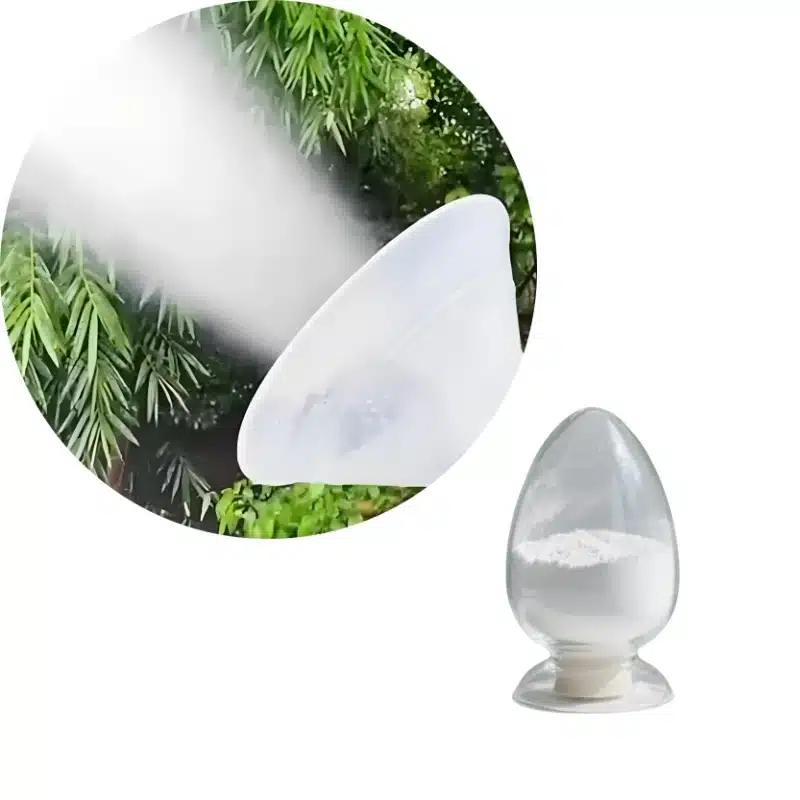
Leveraging its biocompatibility, biodegradability, positive charge characteristics•, and unique molecular structure, chitosan’s application in the pesticide field has expanded from a single adjuvant to a multifunctional role encompassing “synergism – carrier – synergy”. chitosan can both enhance the efficacy of traditional pesticides and reduce their environmental risks, representing a significant direction for green pesticide development.
As a professional manufacturer and supplier of chitosan, Tianya Chemical has been at the forefront of providing high-quality chitosan products tailored for the pesticide industry. Our industrial-grade chitosan undergoes rigorous processing to ensure optimal purity, consistent molecular weight, and reliable functional properties—key factors that make it highly effective in various pesticide applications. With advanced production facilities and strict quality control measures, we guarantee that our chitosan meets the specific requirements of pesticide formulations, supporting the development of greener and more efficient pesticide solutions.
Chitosan itself is not a “pesticide” in the traditional sense. However, it achieves the combined effects of “synergism, toxicity reduction, and prolonged efficacy” through synergistic action with pesticides or direct intervention in pest physiology.
The Mechanisms Of Chitosan For Pesticides
Chitosan Can Disrupte Pest Physiological Barriers, Enhance Pesticide Penetration
The cuticle (body wall) and midgut are the primary barriers pests use to resist external pesticides:
Cuticle Barrier Disruption: The amino groups (-NH₂) in chitosan molecules carry a positive charge, enabling electrostatic adsorption with the pest cuticle (containing negatively charged proteins, lipids, chitin). This disrupts the waxy layer and chitin structure of the cuticle, increasing its permeability and facilitating easier entry of pesticides (such as organophosphates, pyrethroids) into the insect body.
Midgut Barrier Disruption: For chewing pests (e.g., Pieris rapae, Helicoverpa armigera), chitosan can inhibit the activity of chitinase in their midgut. This hinders the degradation of the peritrophic membrane (a chitinous structure protecting the gut), allowing pesticides direct contact with gut wall cells, thereby enhancing the lethal effect.
Chitosan Can Inhibite Pest Detoxification Metabolism, Enhance Pesticide Retention
Detoxification enzymes (e.g., cytochrome P450, esterases) in pests are a major cause of pesticide resistance. Chitosan inhibits the detoxification process through:
Competitively binding to the active sites of detoxification enzymes, reducing their ability to break down pesticides;
Inducing oxidative stress within the pest, consuming “detoxification resources,” indirectly enhancing pesticide toxicity.
Chitosan Can Regulate Pesticide Release, Prolong Efficacy Duration
Chitosan’s film-forming and gelation properties make it an ideal pesticide carrier. It can achieve slow release of pesticides through “microencapsulation” or “embedding” technologies.
Main Applications of Chitosan in Pesticides
Applications of chitosan in pesticides can be categorized as follows:
Chitosan Can Be Used As Synergistic Adjuvant for Chemical Pesticides
Formulating chitosan with chemical pesticides (e.g., pyrethroids, organophosphates) enhances efficacy through the aforementioned “barrier disruption + detoxification inhibition” mechanisms, reducing the required dosage of chemical agents (typically by 20%-30%).
Chitosan Can Be Used As Protective and Synergistic Carrier for Bio-Pesticides
Bio-pesticides (e.g., Bt toxin, insect viruses, fungal spores) are susceptible to environmental degradation (UV light, high temperature, dryness). Chitosan enhances their stability through:
Physical Protection: Forming a protective layer around the bio-pesticide, chitosan shields against UV degradation of Bt protein or maintains humidity requirements for fungal spores (e.g., Beauveria bassiana, Metarhizium anisopliae), extending their survival time in the field (e.g., increasing Beauveria spore survival from 3 days to over 10 days).
Synergistic Effect: Chitosan’s antimicrobial properties can reduce antagonistic microorganisms (e.g., certain bacteria) in the soil against bio-pesticides, indirectly improving biocontrol efficacy.
Chitosan Can Be Core Component of Natural Repellent / Ovicide Formulations
Chitosan itself exhibits direct bioactivity against certain pests and can be formulated into low-toxicity agents.
Chitosan Can Be Used Adhesive and Spreading Agent for Pesticides
Chitosan’s film-forming ability and polarity enhance the adhesion of pesticides to crop surfaces or pest bodies.
Application Advantages and Prospects Of Chitosan
Compared to traditional pesticide adjuvants or carriers, chitosan offers significant advantages:
Environmentally Friendly: Fully biodegradable, residue-free, with high safety for soil, water bodies, and non-target organisms (e.g., bees, earthworms). Complies with green and organic agriculture requirements.
Multifunctional Synergy: Combines multiple roles like synergism, slow release, and adhesion, reducing the need for multiple adjuvants and simplifying formulations.
Reduced Resistance Risk: Acts via non-target site mechanisms (e.g., barrier disruption, detoxification enzyme inhibition), reducing the directional evolution of pest resistance to pesticides.
Renewable Resource: Derived from waste materials like shrimp and crab shells, offering low cost, sustainability, and suitability for large-scale production.
Tianya Chemical, as a trusted chitosan supplier, understands the unique needs of the pesticide industry for consistent, high-performance raw materials. We offer a range of chitosan for pesticide products with customizable specifications, including varying deacetylation degrees and viscosity, to meet the diverse demands of different pesticide formulations. Our commitment to quality and reliability ensures a steady supply chain, backed by professional technical support to assist customers in optimizing their pesticide applications. Whether you’re developing synergistic adjuvants, bio-pesticide carriers, or natural repellent formulations, Tianya Chemical is your reliable partner for high-quality chitosan.
Package & Storage
Package: 25 Kg fiber drum
Storage: Store in a cool, dry place, away from heat and light. The shelf life: 24 months.