1. Overview
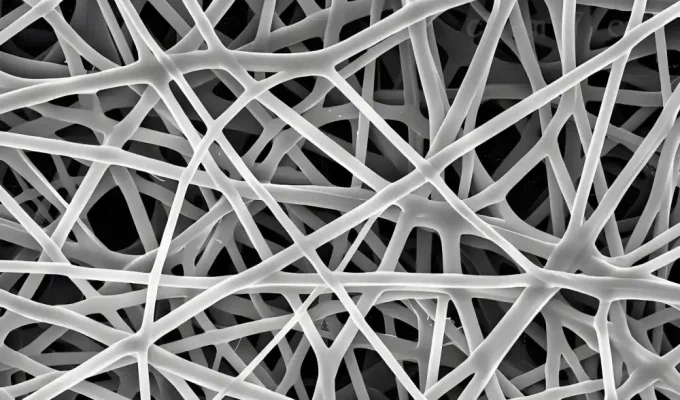
There are few reports on electrospinning of pure chitosan solution systems. It may be that under high static voltage, the repulsion between ions on the main chain of chitosan hinders the formation of electrospun fibers, especially when bending instability and whipping instability occur in the jet, which makes electrospinning of pure chitosan systems difficult. More reports on chitosan electrospinning are about mixing chitosan with other polymers for electrospinning into fibers. Choosing to mix and spin with other polymers that are easier to electrospin into fibers can not only improve the disadvantage that chitosan itself is not easy to electrospin, but also endow chitosan fibers with some new properties. The most common is the electrospinning of chitosan mixed with polyvinyl alcohol. By adjusting the solution concentration and raw material ratio, the mixed solution of chitosan and PVA can obtain smooth and intact fibers through electrospinning, and has a good application prospect in the field of biomedical materials as tissue engineering scaffolds or wound dressings. Chitosan can also be mixed with some other synthetic polymers to prepare electrospun fibers, such as chitosan and PEO, chitosan and PVP, etc. The fiber membrane prepared by electrospinning technology has the characteristics of small fiber diameter and large specific surface area, which is more conducive to cell adhesion and proliferation, and is an ideal tissue engineering scaffold material. In recent years, the improvement of electrospinning devices has enabled the rapid development of electrospinning technology, and coaxial electrospinning is one of them. Core-shell structured electrospun fibers can load certain drugs and bioactive factors in the inner layer, serving as drug sustained-release carriers and tissue engineering scaffolds. Chitosan is a natural polymer with good biocompatibility and biodegradability, while hydroxyapatite is the main component of natural bone, with osteoconductivity and inductivity, and both are widely used in the field of tissue engineering.
2. Electrospinning Technology
Electrostatic fiber manufacturing is one of the most important basic methods to obtain nanofibers at present. The core of this technology is to make charged polymer solutions or melts flow and deform in an electrostatic field, and solidify to obtain fibrous substances after solvent evaporation or melt cooling. Therefore, this process is also called electrospinning, or electrospinning for short. Electrospinning first appeared in 1934, when Formllals first introduced the method of obtaining polymer filaments by using electrostatic repulsion in a patent. After the 1980s, especially since the mid-1990s, with the rapid development of nanotechnology, electrospinning technology has attracted more and more attention, and the theoretical research on electrospinning has made further in-depth development.
The basic electrospinning device basically consists of three parts: a high-voltage electrostatic generator, a thin tube with a small hole at the top containing a polymer solution or melt, and a metal collection screen. The delivery speed of the polymer melt or solution can be controlled by air pressure and a micro-injection pump, or by placing the liquid storage tube containing the liquid at a certain angle to the horizontal so that it is controlled by the gravity of the polymer itself. The two poles of the high-voltage electric field are respectively connected with the polymer liquid and the collection device. In electrospinning, the polymer liquid is often connected to high voltage through a metal wire inserted into the polymer liquid, or a metal clip connected to the polymer liquid at the outlet of the capillary; The collection device is usually a grounded metal foil, metal mesh or rotating drum.
During the electrospinning process, under the action of a high-voltage electric field, the hemispherical droplets of the polymer solution or melt suspended at the outlet of the capillary deform into a cone, and the angle of the cone is 49 degrees. With the further increase of the electric field strength, when the electrostatic repulsion force formed by the charge on the droplet surface exceeds its own surface tension, a liquid filament is formed at the top of the Taylor cone. The charged liquid filament flows in the electric field and is further stretched. At the same time, the solvent evaporates (or the melt cools), becoming ultrafine fibers and depositing on the receiving device to form a non-woven ultrafine fiber membrane.
3. Factors Affecting Electrospinning
3.1 Influence of Polymer Solution Properties and Concentration
When using electrospinning technology to prepare polymer nanofibers, people mostly use the solution spinning method, which requires dissolving the polymer in a suitable solvent. At this time, the boiling point of the solvent has a great influence on the spinning process. If the solvent evaporates too fast, the spinneret orifice will be blocked, hindering the spinning process, and the fibers will dry quickly without complete splitting and refinement, and the fiber diameter will be large; If the volatilization is too slow, the fibers will adhere to each other on the collection plate, and in severe cases, the generated nanofibers will be redissolved. At the same time, different solvents will also affect other parameters such as solution viscosity, surface tension, and electrical conductivity, which will all affect the morphology of the fibers.
3.2 Influence of Electric Field Strength (or Voltage)
Generally speaking, with the increase of voltage, the jet of the polymer electrospinning solution has a greater surface charge density, so there is a greater electrostatic repulsion. At the same time, a higher electric field strength makes the jet obtain a greater acceleration. Both factors can cause greater tensile stress on the jet and the formed fibers, which leads to a higher tensile strain rate, which is beneficial to producing finer fibers.
3.3 Influence of the Distance between the Spinneret and the Collection Plate
The relationship between the distance between the nozzle and the collection plate (that is, the distance between the positive and negative electrodes) and the minimum spinning voltage is very large. If the distance increases, a larger voltage needs to be applied to obtain fibers; If the distance decreases, a smaller voltage is required. At the same time, the size of the distance also affects the drying and splitting refinement of the fiber bundle. If the distance is too short, the solvent will adhere together without sufficient volatilization, and incomplete solvent volatilization will also cause the fiber diameter to increase.
3.4 Influence of Electrospinning Fluid Flow Rate
Usually, the feed rate is controlled by a flow pump (or spinneret inclination). If it is too slow, the spinning speed is low; if it is too fast, the fiber bundle cannot be fully stretched, the diameter of the fiber becomes larger, and what’s more, it falls onto the receiving plate in the form of large droplets.
4. Chitosan
Chitosan is a deacetylated product of chitin, a natural biological macromolecular linear polysaccharide, and a rare positively charged high-molecular polymer in nature. After complete biodegradation by chitosanase, lysozyme, etc. in nature, chitosan participates in the carbon and nitrogen cycles of the ecological system.
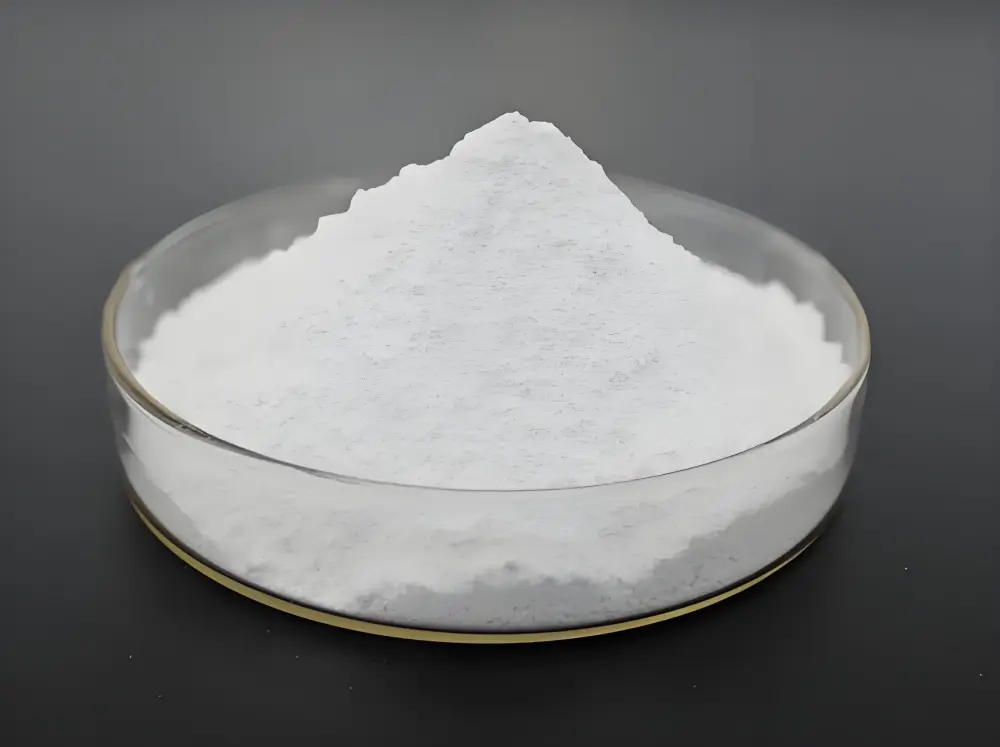
The chemical name of chitosan is (1, 4)-2-amino-2-deoxy-β-D-glucan. Chitosan is a product of N-deacetylation of chitin. Generally speaking, if more than 55% of the N-acetyl groups are removed, it can be called chitosan. This degree of deacetylation of chitosan is soluble in 1% acetic acid or 1% hydrochloric acid. Therefore, any chitin that is soluble in 1% acetic acid or 1% hydrochloric acid can be called chitosan. Chitosan is a white or off-white amorphous, translucent solid with a slight pearly luster. Due to different raw materials and preparation methods, its relative molecular mass ranges from several hundred thousand to several million.
The repeating unit of the main chain of chitosan has hydroxyl and amino groups, and can undergo N and O reactions under different reaction conditions to crosslink and chemically modify chitosan. Chitosan can be crosslinked by bifunctional aldehydes or acid anhydrides to obtain insoluble products with a network structure. After crosslinking, chitosan is insoluble in dilute acids. The main purpose of crosslinking is to make the product insoluble, and even the swelling is very small, and the properties are very stable, which is very important for the application of chitosan in some aspects. Commonly used crosslinking agents are glutaraldehyde, formaldehyde, and glyoxal, which can be carried out at room temperature with a relatively fast reaction rate. They can be carried out in aqueous solution or in heterogeneous media, and can occur in a wide pH range. The crosslinking reaction mainly occurs between molecules, and intra-molecular occurrence is not excluded. Crosslinking is more about the formation of Schiff base structures between aldehyde groups and amino groups of chitosan, followed by the reaction between aldehyde groups and hydroxyl groups.
5. Current Status of Chitosan Electrospinning
In 2004, Japanese scholar Ohkawa et al. successfully electrospun pure chitosan fibers with a diameter between 210 – 650 nm using trifluoroacetic acid as a solvent. Byung. Moo Min successfully electrospun chitin and chitosan nanofibers. Park et al. found that when formic acid was used as the solution solvent for chitosan, continuous fibers could not be obtained, which was consistent with Ohkawa’s conclusion. Due to the low solubility of chitosan, high solution viscosity, and the characteristics of polycationic electrolyte, it is difficult to electrospin pure chitosan solution. Therefore, methods such as blending and grafting are used to improve its spinnability. Duan et al. found that adding an appropriate amount of polyethylene oxide (PEO) to the acetic acid solution of chitosan can greatly improve the spinnability of chitosan. However, when silk fibroin and chitosan are dissolved in formic acid to prepare concentrations of 70:30 respectively, fibers with an average diameter of 130 nm can be spun. You. Lo Hsieh and Zhang Yuanyuan et al. used dilute acetic acid aqueous solution as a solvent to prepare chitosan and polyvinyl alcohol composite ultrafine fibers, but bead-like fibers appeared, using different electrospinning processes, poly(lactic-co-glycolic acid) (PLGA) and ofloxacin were incorporated into the chitosan and polyvinyl alcohol system to obtain fibers with better performance. Bulgarian scholar Milena Ignatova et al. tetra-substituted chitosan molecules to obtain N-butyl-N, N-dimethyl iodinated chitosan (QCh), and made a solution mixed with PVA for electrospinning to obtain fibers with an average diameter of 60 – 200 nm. The prepared fibers increased the stability of the fibers to water and water vapor through the action of the crosslinking agent triethyl ethylene glycol dipropionate. And antibacterial tests were carried out on the prepared fibers, and it was found that they had significant inhibitory effects on Staphylococcus and Escherichia coli, thereby enabling them to be applied to wound healing products.
6. Applications
In addition to being used in various medical products, chitosan fibers can also be used in sportswear, especially in places where sweat is relatively concentrated, such as sports socks, sweat bands, and shoe linings. In addition, men’s and women’s underwear, briefs, swimsuits, etc. made of it also utilize its antibacterial properties. It also has good applications in pajamas, children’s blankets, napkins, masks, etc.
Tianya Chemical is a professional manufacturer and supplier of chitosan and related products, committed to providing high-quality materials for various applications. Contact us today for your chitosan needs!